




Colorado Springs Utilities Rates Are Increasing in 2026: What You Need to Know
CSU rates rise in 2026 with new Energy Wise time-of-use pricing. See what’s changing and how solar can help control energy costs. Learn more.
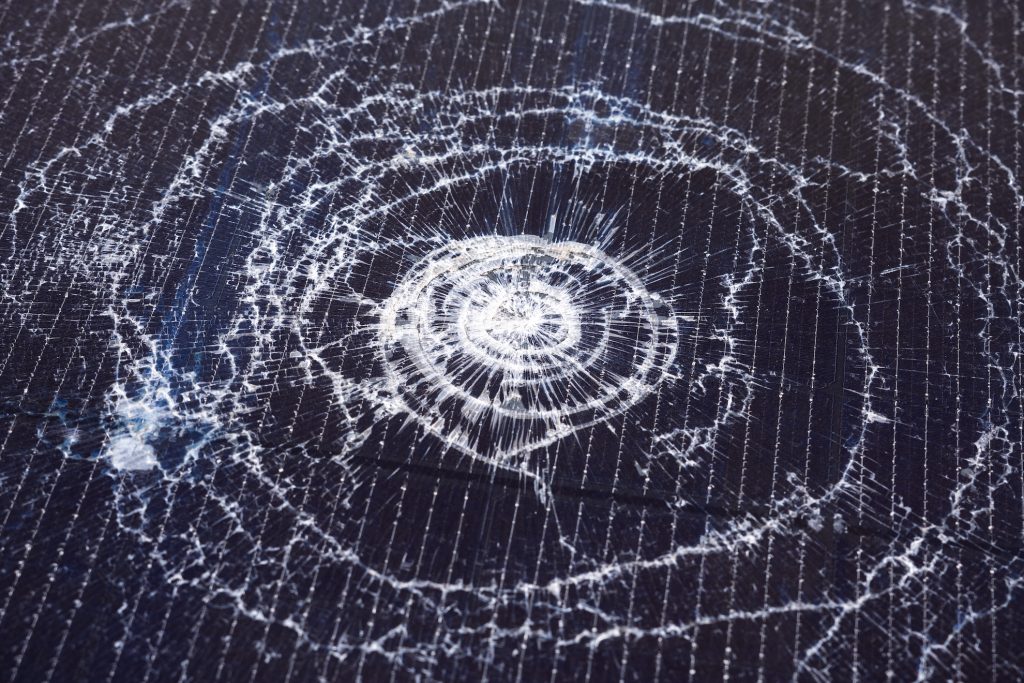
Hail damage is one of the biggest concerns we hear from customers who are thinking about installing solar panels in Colorado. It’s a valid concern—we can see some pretty intense hail storms on the Front Range, and since panels are roof-mounted, they take the brunt of the weather.
Luckily, most hail storms are not strong enough to damage solar panels. But when damage does occur, it’s almost always from extreme or unusually large hailstones.
This guide explains how hail impacts solar panels, what to do if your solar panels get hit, how insurance works, and how to repair hail damage quickly and safely.
Solar panels are more durable than many homeowners and businesses realize. While the glass faces are technically a point of vulnerability, high-quality panels must pass strict impact testing–including hailstones up to about one inch in diameter at high velocity.
At Solar Power Pros, we install top-tier panels with excellent hail resistance. You’ll want to look for panels with a UL 61730 or IEC 61730 rating, which means they’ve undergone rigorous testing. Products we’ve installed like the Hyundai 435W Bifacial solar panels and Qcells 430 solar panels meet these requirements. To learn about our current available products, reach out.
Surprisingly, your roof is significantly more susceptible to hail damage than your solar panels. In most hail storms, your solar array will actually act as a shield, protecting a large portion of your roof. Coloradans know how heavy and unpredictable the hail season can be, which usually occurs between mid-April through mid-September. You may find it hard to believe solar panels can be this durable. But it’s true—take this real-world scenario as an example.
In May of 2017, a massive hailstorm ripped through the Colorado foothills, damaging thousands of roofs, properties, and vehicles.
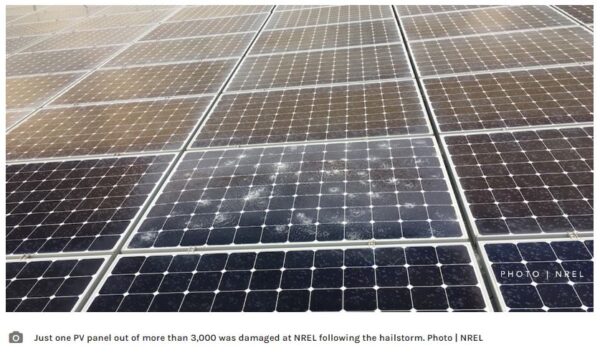
One area hit hardest was Golden Colorado, home to the National Renewable Energy Laboratory (NREL) where solar technologies are developed and continuously improved. NREL is home to a solar array of more than 3,000 panels! Only one panel at NREL was broken out of the thousands present. For a storm of that scale, it remains one of the strongest real-world demonstrations of solar panel durability.
Panels can withstand hailstones up to 1-1.25 inches in most cases. Damage typically becomes possible with golf-ball-sized hail or larger.
Yes. Higher-quality panels often have stronger glass, higher IEC impact ratings, and more durable frames. We can advise on panel hail ratings (ex: Qcells, Hyundai) if needed.
Solar panels are impressively strong, but Colorado does see occasional storms with 2-inch or larger hailstones during particularly strong hail years. If your home or commercial property gets hit, here’s what to do step-by-step:
After a hail storm, look for:
Use binoculars or a drone if possible to inspect your panels. Do NOT get on your roof after any severe weather event.
Safely take photos if visible from the ground. Take note of unusual system behavior, alerts, or monitoring drops.
When you get in touch with Solar Power Pros, our technicians can:
Repairs made by non-solar professionals can void your warranty, so it’s crucial to bring in a certified technician.
Most solar panel warranties don’t cover hail damage because hail is considered an environmental event. However, that doesn’t mean you have to pay for all the repairs out of pocket.
Most homeowner’s insurance or commercial property insurance will include solar panels as a part of a roof damage claim. While Solar Power Pros doesn’t file claims on your behalf, we do provide the detailed assessment and documentation your insurer typically requires. This ensures you have clear evidence of the damage and a professional recommendation for repair or replacement.
Before you hire the first random roofing company that knocks on your door after a hailstorm, contact our Pros. As a residential solar maintenance company, our technicians are highly qualified to assess for damage. If your roof is also damaged, we can recommend a trusted roofing partner. We work directly with your chosen roofer to ensure:
Over our 12+ year history, we most commonly see the need for our specialized solar panel removal and replacement service due to roof repair, as opposed to solar panel damage. Solar Power Pros technicians are W-2 employees–no subcontractors–ensuring consistent quality, safety, and accountability.
If you’re ready to get started, request service today.
Not for typical hail, but after large hail (1.5″ or bigger), it’s smart to visually check from the ground and contact a technician for a professional inspection if anything looks unusual.
Yes — microcracks can reduce output. Monitoring data usually reveals this quickly.
Monitoring drops, alerts, or uneven string performance are common first signs. We offer full commercial hail-damage inspections.
All panels must meet minimum impact ratings, but premium modules offer improved hail resistance. We can review panel options case-by-case.
Homeowners insurance typically covers hail damage. Commercial coverage varies by policy. We assist both homeowners and businesses with documentation.
Sometimes—but it must be installed carefully to avoid shading or structural issues. Some commercial and agri businesses explore protective netting to mitigate damage risks in hail-prone regions. We do not typically install hail netting, but we can advise when it may be appropriate or recommend alternatives (panel tilt adjustments, stronger panel options, monitoring alerts).
When hail hits, fast, expert evaluation makes all the difference. Whether you need an inspection, repair, system removal, or reinstallation, Solar Power Pros is here for you.

CSU rates rise in 2026 with new Energy Wise time-of-use pricing. See what’s changing and how solar can help control energy costs. Learn more.

MVEA electric rates increase 8.5% in 2026. Learn what’s driving the hike, how it affects your utility bill, and how solar can help you stabilize costs.